
There are hotels with a view of Ha Long Bay, and then there are hotels that seem to have been designed specifically to belong to the destination. InterContinental Halong Bay Resort is an example of the perfect blend between the design and the destination’s characteristics.
Opened in 2025, the resort marked a significant arrival for one of Vietnam’s most popular destinations: it became the first international luxury resort in Ha Long Bay. More importantly, it brings a level of design, dining and resort sophistication that gives travellers a reason to experience the bay differently. Instead of treating Ha Long Bay as something to admire for a few hours from a sightseeing boat, InterContinental makes the landscape the central character of the stay.
That distinction matters.
Ha Long Bay is already one of the world’s great natural spectacles, recognised by UNESCO for its extraordinary seascape of limestone islands and islets. The challenge for a new luxury resort is therefore not to compete with the scenery, but to avoid overpowering it.
InterContinental Halong Bay’s answer is unusually thoughtful: make the architecture echo the landscape.
A resort designed around the landscape, not imposed upon it
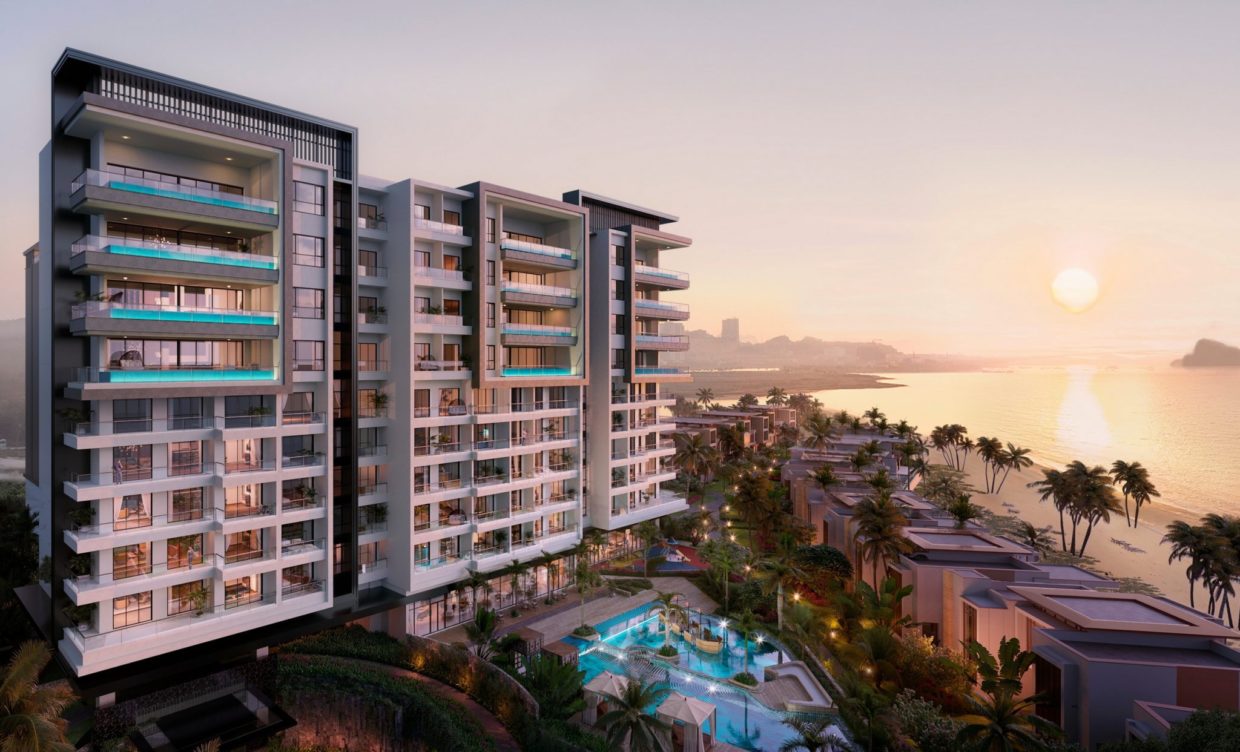
The resort was designed by WATG, one of the world’s best-known hospitality architecture and design practices. Its 4-hectare development incorporates the hotel, residences and villas, with the architecture drawing directly from the vertical forms and layered geology of Ha Long Bay’s limestone islands.
The result is immediately different from the conventional tropical-resort formula.
Rather than relying on generic resort architecture, the buildings use stone-clad surfaces, strong vertical lines and stratified forms that reference the dramatic limestone formations rising from the water. WATG describes the design as a contemporary interpretation of the landscape, using natural materials and geometric forms to establish a connection between the resort and its surroundings.
Even the environmental thinking is embedded in the design. WATG says the project was designed with EDGE-certified sustainable systems projected to reduce energy consumption by 31 percent and water consumption by 27 percent compared with a conventional design. Natural stone also contributes to insulation, while low-emissivity glass helps reduce heat gain.
This is the sort of detail that is easy to miss in photographs, but becomes much more meaningful when you are actually staying there.
The resort does not attempt to recreate an old Vietnamese village or turn local culture into decoration. Instead, it interprets Ha Long Bay through contemporary luxury.
That is a much more interesting proposition.
275 keys, but not a conventional hotel
InterContinental Halong Bay is considerably more ambitious than a standard beachfront hotel.
The resort currently offers 275 accommodations across suites, residences, villas and the Halong Bay Estate. This gives the property a broader range of experiences than the typical luxury resort, from sophisticated hotel accommodation to more expansive residential-style stays.
The distinction between a resort room and a resort residence is particularly relevant for longer stays and multigenerational holidays. Families can enjoy considerably more space, while couples can choose a more intimate hotel experience without giving up the sense of being in a full-scale resort.
And throughout the accommodation design, the bay remains present.
The interiors by P49Deesign take inspiration from Vietnam’s traditional bamboo basket boats in the lobby, while guestroom interiors draw on the colours of the surrounding landscape. Turquoise upholstery, brass details and textured finishes reference the water, marine life and the iridescent qualities of the pearls associated with Ha Long Bay.
It is a subtle approach to Vietnamese design.
Rather than filling rooms with obvious cultural motifs, the designers have translated local references into colour, texture, form and material.
The view is not an amenity. It is the reason for the architecture.
The defining pleasure here is the relationship between the resort and the bay.
From the property, the landscape opens towards the green-clad limestone islands and blue waters that have made Ha Long famous. The resort’s beachfront position gives guests something that a conventional city hotel or cruise cannot quite replicate: the ability to experience the landscape continuously, from morning coffee through sunset and into the evening.
And that changes the rhythm of a Ha Long Bay holiday.
A cruise gives you movement through the landscape. InterContinental gives you a place from which to live alongside it.
You can spend the morning by the water, retreat to the pool in the afternoon, take a spa treatment, have dinner overlooking the bay and still wake up the following morning with the same extraordinary limestone formations outside your window.
For travellers who find conventional sightseeing exhausting, this is perhaps the resort’s strongest proposition.
You do not have to keep moving to experience Ha Long Bay.
Six dining experiences give the resort another reason to stay in
The dining programme is another major strength.
InterContinental Halong Bay has six distinct dining venues, creating a surprisingly broad culinary offering within the resort.
Marina Kitchen focuses on seafood and modern coastal cuisine, an obvious fit for a resort beside one of Vietnam’s great maritime destinations.
La Baguette takes a different direction, combining French and Vietnamese influences in a more casual bistro setting.
Yulong Mansion brings refined Chinese dining to the property, with Cantonese cuisine alongside Northern and Sichuan influences. The restaurant also includes private dining rooms, making it particularly suited to celebratory meals or family gatherings.
Vue, meanwhile, occupies the lobby lounge role, with afternoon tea, cocktails and views towards the bay.
Del Mar moves the experience closer to the water. The poolside lounge draws inspiration from Cửa Vạn, one of Ha Long Bay’s famous floating fishing villages, connecting the resort’s food-and-drink experience back to the culture of the bay.
Then there is the resort’s rooftop proposition.
Roku Dining Room and Star Bar are positioned on the 10th floor, creating a high-altitude setting for Japanese dining, drinks and panoramic views. The Japanese concept explores six traditional cooking techniques, while the accompanying Sake Library gives the experience a more sophisticated edge. The dramatic bamboo installation is inspired by the legend of the descending dragon from which Ha Long’s name derives.
That last detail is particularly clever.
Instead of simply putting a rooftop bar on top of the building because every luxury resort needs one, InterContinental has used the space to tell another chapter of the Ha Long story.
A spa inspired by a hidden lagoon
The resort’s wellness offering follows the same philosophy.
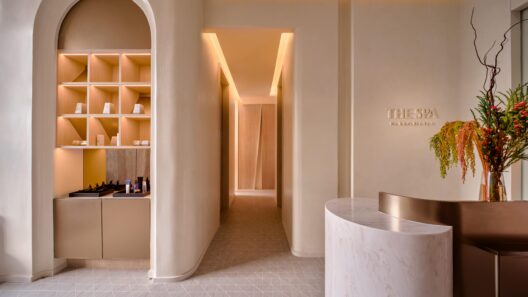
Hidden Lagoon is the signature spa, and its design takes inspiration from the secluded lagoons found among Ha Long Bay’s islands. Even the spa’s sunken garden echoes this idea, effectively bringing one of the bay’s hidden natural features into the architecture.
Treatments are offered in collaboration with Margaret Dabbs London and Sodashi, combining beauty and wellness rituals with a more holistic approach to the spa experience.
For a destination where the scenery is the primary attraction, this makes sense.
The best luxury experience in Ha Long does not necessarily involve another excursion. Sometimes it is simply an afternoon spent moving between the pool, spa and sea, with the karsts providing the backdrop.
It is also unusually well equipped for families
This is one area where InterContinental Halong Bay quietly distinguishes itself from some of Vietnam’s more adult-oriented luxury resorts.
Planet Trekkers, the children’s club, is designed for children aged four to 12 and incorporates activities with a distinctly Vietnamese flavour, including conical-hat painting, canvas-bag decorating and candle making.
Older children and teenagers have their own space in The Game Room, which includes a cinema, internet gaming, billiards, darts, foosball and air hockey.
There are also three swimming pools, beach volleyball and outdoor archery, giving families genuine alternatives to simply sitting by the pool.
That makes the resort particularly interesting for affluent families who want luxury without choosing between an adult-focused retreat and a child-friendly resort.
The beach changes the way Ha Long Bay feels
Perhaps the biggest practical difference is the resort’s beachfront setting.
Ha Long is famous primarily as a sightseeing destination, but a luxury traveller may want something different from a cruise itinerary packed with scheduled stops.
InterContinental provides a more conventional resort experience while keeping the defining landscape of Ha Long Bay immediately present.
That means you can approach the destination in two ways.
You can explore the bay by boat, visit its caves and islands and experience its famous geological scenery from the water.
Or you can simply stay put.
That second option is surprisingly appealing.
A slow breakfast. A swim. A few hours on the beach. A spa treatment. A long lunch. Sunset drinks. Dinner overlooking the water.
The resort makes it possible to experience Ha Long Bay as a place to stay rather than merely a place to visit.
And that may be its greatest achievement
There is an understandable temptation when reviewing a new luxury resort in a destination as famous as Ha Long Bay to focus on the obvious things: the rooms, the pools, the restaurants and the views.
But InterContinental Halong Bay is more interesting than the sum of those parts.
Its strongest quality is coherence.
The architecture references the limestone islands.
The interiors interpret Vietnamese traditions through contemporary design.
The spa borrows the idea of hidden lagoons.
The restaurants connect with seafood, French-Vietnamese cuisine, Chinese gastronomy and Japanese dining.
The rooftop bar draws on the legend of the descending dragon.
Even the children’s activities introduce younger guests to Vietnamese cultural elements.
The result is a resort that feels connected to its destination rather than simply located there.
That is important in a place like Ha Long Bay.
When the landscape is already extraordinary, a hotel does not need to shout.
It needs to frame it well.
Who should stay at InterContinental Halong Bay?
For couples, the appeal is obvious: dramatic scenery, sophisticated dining, a serious spa and an atmosphere that allows the bay to become part of the romance without resorting to cliché.
For families, the combination of large accommodation choices, multiple pools, children’s programming, teen facilities and extensive dining makes the resort unusually versatile.
For design-conscious travellers, the architecture is arguably the most compelling reason to visit. WATG’s interpretation of Ha Long’s limestone landscape gives the resort a stronger sense of place than many new-build luxury properties manage to achieve.
And for travellers who have already seen Ha Long Bay from a cruise, the resort offers something genuinely different.
It allows you to slow down.
Instead of spending one day passing through one of the world’s most spectacular landscapes, you can wake up inside it, spend the day beside it and watch the light change across it.
That is ultimately what makes InterContinental Halong Bay distinctive.
It is not trying to be the next famous Vietnamese resort.
It is creating a new way to experience one of Vietnam’s most famous places.
InterContinental Halong Bay Resort is where the limestone landscape, Vietnamese culture and contemporary international luxury come together in one unusually considered address. And for travellers looking for a more sophisticated, slower and more immersive way to experience Ha Long Bay, that may be precisely the point.