

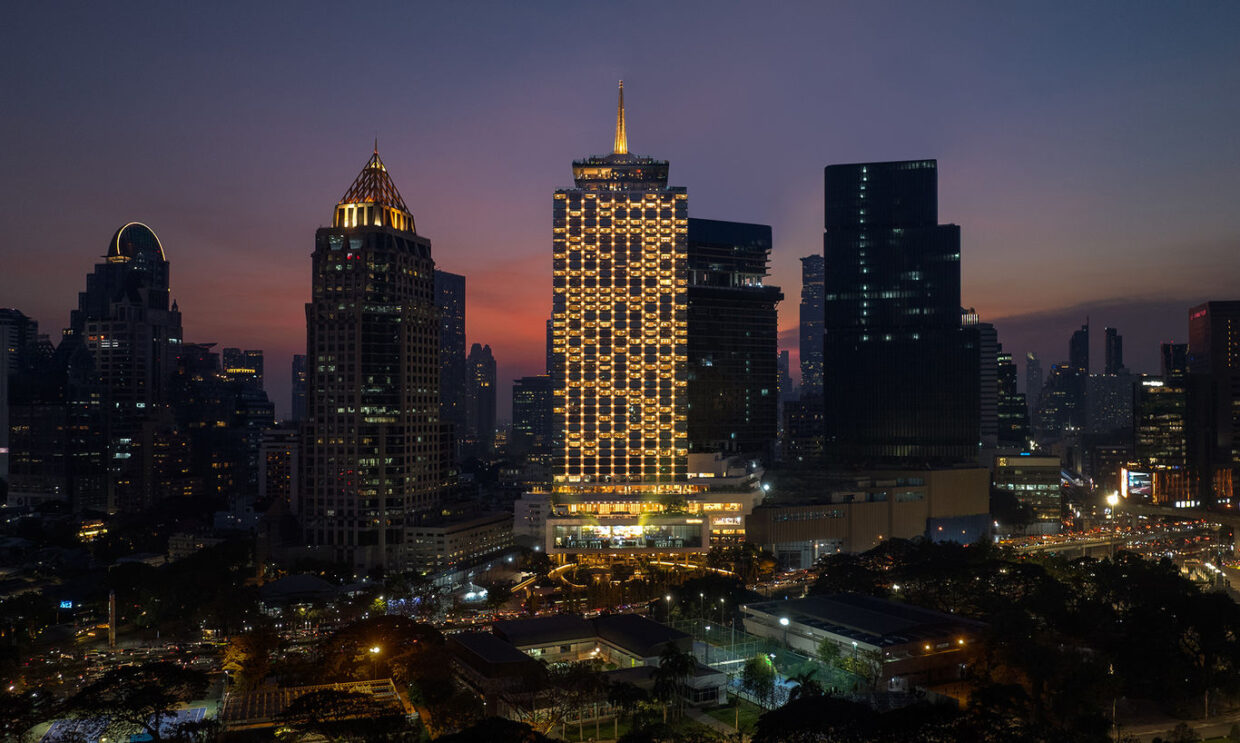
There was always something slightly different about Dusit Thani Bangkok.
The original hotel, which became one of Bangkok’s most recognisable addresses, was never simply another five-star property. It represented a particular idea of Thai hospitality: gracious, polished, distinctly local and confident enough not to chase every passing luxury trend.
When the original Dusit Thani closed, Bangkok lost more than a hotel. It lost an institution.
Now, the name is back.
But the new Dusit Thani Bangkok is not an exercise in nostalgia. It is a considerably more ambitious proposition. Rising above Lumpini Park as part of the new Dusit Central Park development, the hotel combines the heritage of the Dusit name with a new generation of restaurants, bars, wellness experiences and urban spaces.
And this is where the new Dusit Thani becomes interesting.
You no longer have to stay here to have a reason to come here.
You can come for dinner at Cannubi by Umberto Bombana. You can come for Thai food at Benjarong. You can meet friends for drinks at 1970 Bar. You can watch Bangkok from Spire Rooftop Bar. You can spend an afternoon over coffee and pastries at Dusit Gourmet. Or you can simply sit somewhere overlooking Lumpini Park and watch one of the world’s great cities move around you.
Stay overnight, and all of that becomes part of a much larger experience.
A hotel designed around the view
The first thing that distinguishes the new Dusit Thani is its relationship with Lumpini Park.
Rather than treating the park as an incidental view from selected rooms, Dusit has made it central to the hotel’s identity. The accommodation has been designed with park-facing views, giving guests an unusually strong sense of greenery despite being in the middle of Bangkok.
The rooms are generous by modern city-hotel standards. Deluxe and Premier rooms measure around 50 square metres, with large windows, Thai-inspired furnishings, marble bathrooms and freestanding bathtubs. Corner rooms add a second wall of glass and broader views across the park and city.
That makes a difference.
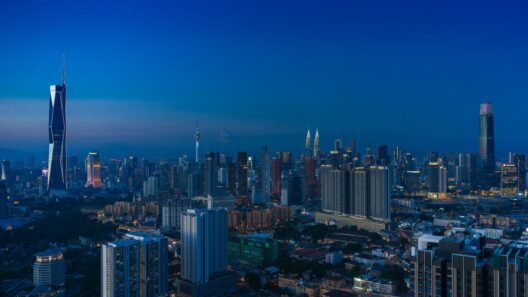
Bangkok is visually intense. Towers, traffic, advertisements, construction and movement are everywhere. From Dusit Thani, however, the view changes dramatically. The green expanse of Lumpini Park sits immediately below the skyline, creating a rare contrast between tropical calm and metropolitan energy.
It is particularly effective in the morning.
Open the curtains and the city feels surprisingly quiet.
Come back after dark and Bangkok has become a completely different landscape.
Several recent guests have specifically singled out the rooms and views. One described a corner room overlooking Lumpini Park as a “haven of peace”, while another praised the spacious rooms, large bathrooms and skyline views at night.
This is one of the hotel’s greatest strengths: the view is not simply something to photograph. It changes the feeling of staying in central Bangkok.
The service is the real comeback story
Beautiful hotels are relatively easy to build.
Creating a hotel where people remember how they were treated is considerably harder.
This is where the new Dusit Thani appears to have understood the importance of its own history.
Guest reviews are remarkably consistent on this point. Recent visitors repeatedly mention warm, attentive and unusually proactive staff. One guest wrote about employees remembering small personal details without being asked. Another praised the team from the doormen to the restaurant staff. A further review described the service as the best they had experienced among numerous five-star hotels around the world.
There is an important distinction here.
Luxury service is not necessarily about formality.
The better version of luxury is anticipation.
Knowing when to leave a guest alone. Remembering what they ordered. Noticing that someone needs something before they ask. Recognising a returning guest. Getting the small things right without turning the interaction into a performance.
That is the kind of service that made Dusit famous in the first place.
The reviews suggest that the new hotel is bringing that philosophy forward rather than simply reproducing the visual language of old Dusit.
A serious reason to come here for dinner
If the rooms make Dusit Thani worth staying in, the culinary programme makes it worth visiting.
The hotel has positioned its restaurants and bars as destinations in their own right, and that description is not marketing exaggeration.
The headline is Cannubi by Umberto Bombana, the Italian restaurant created around the philosophy of celebrated chef Umberto Bombana.
In the 2026 MICHELIN Guide Thailand, Cannubi received one MICHELIN Star, making it the only Italian restaurant in Thailand to receive that distinction in the 2026 guide. The restaurant also has a wine cellar with more than 350 labels.
For Bangkok diners, that immediately changes the equation.
Cannubi is not simply a hotel restaurant.
It is a restaurant you can choose independently of the hotel, with a dining experience strong enough to justify the journey on its own.
Then there is Benjarong Bangkok, which takes a very different approach.
The restaurant draws from the heritage of the original Benjarong and serves Thai recipes with roots stretching back to the 1800s and early 20th century. Some dishes have been retained from the Benjarong that operated at the original Dusit Thani from the 1970s.
This is arguably where the new Dusit feels most connected to its predecessor.
It is not trying to make Thai food fashionable.
It is trying to make Thai culinary heritage relevant again.
Pavilion takes another approach, focusing on Thai cuisine through regional ingredients and techniques. Dishes include southern Thai yellow curry with red grouper, grilled Chiang Rai black pork neck with young tamarind relish and braised Thai grain-fed beef shank.
Then there is Thien Duong, offering Vietnamese cuisine in a setting influenced by French colonial design.
For something more relaxed, Dusit Gourmet provides pastries, viennoiseries, coffee, breakfast, light meals and afternoon treats throughout the day. There is also a second Dusit Gourmet at Baan Dusit Thani, housed in a heritage residence surrounded by gardens.
Taken together, the hotel has created something unusual for Bangkok:
you could spend an entire weekend eating here without feeling as though you were eating in the same place twice.
Bangkok from above
Then there is the rooftop.
Spire Rooftop Bar sits at the top of the hotel beneath Dusit Thani’s distinctive golden spire, with a 360-degree panorama of Bangkok.
The concept is deliberately social rather than overly formal, with cocktails created in collaboration with the team behind Tropic City, music and food designed around the evening atmosphere.
It is the sort of place that makes sense even if you are not staying upstairs.
Come before sunset.
Watch the light move across Lumpini Park.
Stay as Bangkok begins to illuminate.
Then look back towards the hotel itself and you begin to understand the architecture of the new Dusit Thani: it is designed to make the city part of the experience.
For a more intimate evening, 1970 Bar on the 39M floor takes inspiration from the glamour of the original Dusit era, with a retro penthouse aesthetic and expansive city views.
This gives the hotel two very different personalities after dark.
Spire is Bangkok now.
1970 is Bangkok remembered.
And then there is Baan Dusit Thani
One of the most appealing aspects of the property is that its experience does not end at the tower.
A short walk, or a brief ride on the hotel’s complimentary electric tuk-tuk, brings guests to Baan Dusit Thani, a heritage house surrounded by greenery.
It provides a completely different sense of place from the tower.
This is Bangkok at a slower pace: gardens, traditional architecture, intimate dining and the feeling of having stepped away from the city without actually leaving it.
The contrast is clever.
The tower delivers height, glass, skyline and contemporary luxury.
Baan Dusit Thani delivers history, gardens and intimacy.
Together they make the property feel much larger than a conventional hotel footprint.
Wellness without leaving the city
The hotel’s Devarana Wellness continues the same philosophy.
The name has long been associated with Dusit’s spa and wellness concept, but here it becomes part of a larger urban retreat.
The idea is simple: you can spend the morning in one of Asia’s busiest capitals and still build an entire day around slowing down.
That matters in Bangkok.
A luxury hotel here does not necessarily compete with the city.
The best ones provide an elegant way to experience it without becoming exhausted by it.
Dusit Thani understands that distinction.
The Central Park advantage
Perhaps the biggest difference between the new Dusit Thani and the old hotel is what surrounds it.
The hotel forms part of Dusit Central Park, giving guests direct access to a new 130,000-square-metre lifestyle destination with more than 230 brands across fashion, dining, entertainment and other experiences.
This is significant because the hotel does not exist as an isolated luxury tower.
It sits at the intersection of Lumpini Park, Silom, Rama IV Road and Bangkok’s rapidly changing central-city landscape.
The location is also unusually well connected, with access to both BTS Sala Daeng and MRT Silom.
In practical terms, that means a guest can have breakfast overlooking Lumpini Park, spend the afternoon shopping or exploring Central Park, return for a spa treatment, have dinner at a Michelin-starred restaurant and finish the evening on a rooftop overlooking Bangkok.
Without really going anywhere.
That is the point.
What guests are saying
The early guest response is especially interesting because the praise goes beyond the expected comments about a new luxury hotel.
Google’s current review profile shows 4.8 out of 5 from more than 1,400 reviews, with particularly strong scores for proximity to transport and things to do.
Recent reviews repeatedly highlight four things:
The service. Guests frequently describe the staff as warm, attentive and proactive.
The rooms. Space, design, bathrooms and especially the Lumpini Park views receive consistent praise.
The location. The combination of the park, BTS, MRT and Central Park makes the hotel unusually convenient for both leisure and business travellers.
The sense of occasion. Guests describe the property as somewhere they would return to, rather than simply somewhere they happened to stay.
There are small criticisms too, which make the praise more credible. Some guests mention busy periods at check-out and occasional housekeeping timing issues.
Those are hardly surprising for a major new city hotel and, importantly, they do not appear to dominate the overall guest sentiment.
The Luxora verdict
The temptation with the new Dusit Thani Bangkok is to ask whether it successfully replaces the legendary original.
That is the wrong question.
It does not need to.
The original belongs to another Bangkok. The new Dusit belongs to this one.
What makes it compelling is the way it combines several things that Bangkok’s luxury hotels often offer separately.
There is the history of Dusit.
There is the contemporary architecture.
There is the view over Lumpini Park.
There are genuinely destination-worthy restaurants.
There is Michelin-starred Italian dining.
There is Thai culinary heritage.
There is a rooftop with a 360-degree city panorama.
There is wellness.
There is a heritage house hidden behind the tower.
There is direct access to a major new lifestyle destination.
And, perhaps most importantly, there is a level of hospitality that appears to have survived the transition from the old Dusit Thani to the new one.
That combination changes the way you should approach the hotel.
Do not book Dusit Thani Bangkok simply because you need a room in Bangkok.
Book it because you want a few days where the hotel itself becomes part of the trip.
Come for the park view.
Stay for the service.
Have dinner at Cannubi.
Try Benjarong.
Spend an afternoon at Baan Dusit Thani.
Watch sunset from Spire.
Take time at Devarana.
Walk through Central Park.
Then return to your room, draw the curtains and look out over Lumpini Park.
At that point, the distinction between hotel and destination starts to disappear.
Dusit Thani Bangkok is not simply back. It has come back with a reason to stay in.